
Titanium is a metal with exceptional properties that finds numerous applications in diverse fields such as aerospace, the chemical industry, the medical industry, and the automotive industry. Its lightness, high strength, and excellent corrosion resistance make it a highly valued material. However, there are several grades of titanium, each with specific characteristics that make them suitable for particular uses. In this article, we will explore the different grades of titanium and their respective applications.
A titanium grade refers to a specific classification that indicates the chemical composition and mechanical properties of a titanium alloy. Each titanium grade has unique characteristics that make it suitable for specific applications. Titanium grades are typically designated by numbers or letters and are used in various industrial sectors, including aerospace, chemicals, medical devices, and automotive.
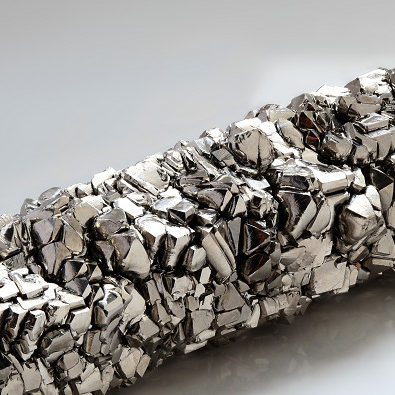
Grade 1 Titanium:
Grade 1 titanium, also known as CP (Commercially Pure) Grade 1 or T35, is the purest grade of titanium available on the market. It is primarily composed of 99% pure titanium, with trace amounts of oxygen and carbon. This grade offers excellent corrosion resistance and good ductility. It is commonly used in the chemical industry for heat exchangers, chemical storage tanks, and reactors.
Grade 2 Titanium:
Grade 2 titanium, also known as CP Grade 2 or T40, is slightly less pure than Grade 1, with a titanium content of approximately 98.5%. It is also alloyed with small amounts of oxygen and carbon. Grade 2 is valued for its corrosion resistance and weldability. It is used in numerous industrial applications, including pipes, storage tanks, marine components, and non-permanent medical implants.
Grade 3 Titanium:
Grade 3/T50 titanium is similar to grade 2 in terms of chemical composition, but it has slightly higher mechanical strength. It is primarily used in the aerospace industry for lightweight structural components, such as beams and panels.
Grade 4 Titanium
Grade 4/T60 titanium is an alloy with superior mechanical strength compared to grades 1, 2, and 3. It is composed of pure titanium with a slightly higher oxygen content. This grade is used in applications requiring high strength, such as turbomachinery components, brake parts, and chemical processing equipment.
Grade 5 Titanium
Grade 5 titanium, also known as Ti-6Al-4V, is the most widely used titanium alloy. It is composed of 90% titanium, 6% aluminum, and 4% vanadium. This grade offers excellent mechanical strength, corrosion resistance, and light weight. It is commonly used in the aerospace industry, the manufacture of medical prostheses, bicycle parts, and sporting goods.
Grade 7 Titanium
Grade 7 titanium is similar to grade 2, but it contains a small amount of palladium. This addition improves corrosion resistance, particularly in acidic environments. Grade 7 is commonly used in heat exchangers, chemical equipment, and condensers.
It is important to note that there are other grades of titanium, such as grades 9, 12, 23, which are used in specific applications, such as permanent medical implants, scuba diving equipment and surgical tools.
In conclusion, the various grades of titanium offer a range of mechanical properties and corrosion resistance that make them suitable for a variety of industrial applications. Whether in aerospace, the chemical industry, the medical industry, or other sectors, titanium continues to play a vital role by providing durable and high-performance solutions.